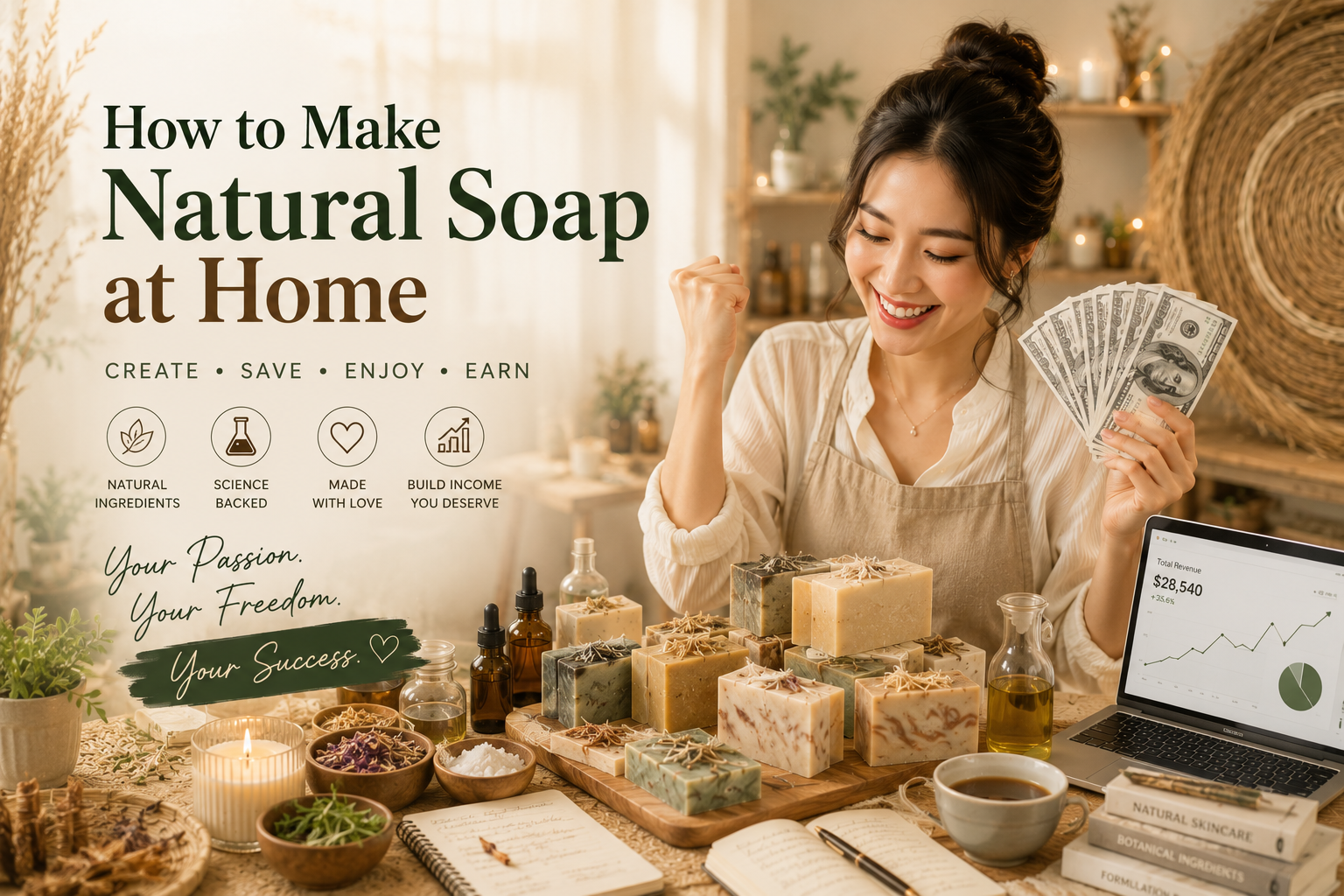
Natural soap making is one of the most rewarding skills you can learn. Whether you want to create handmade gifts, start a small business, or simply avoid unnecessary additives, making your own soap gives you complete control over the ingredients that touch your skin.
In this beginner-friendly guide, you’ll learn the basics of natural soap making and discover why handmade soap remains popular around the world.
Why Make Natural Soap?
Many commercial soaps contain synthetic detergents, artificial fragrances, and harsh cleansing agents. Handmade natural soap allows you to choose ingredients that suit your skin and personal preferences.
Benefits of natural soap include:
- Control over ingredients
- Custom scents and colors
- Reduced unnecessary additives
- Creative and enjoyable hobby
- Potential business opportunity
Essential Ingredients for Soap Making
Most cold process soaps require:
Oils and Fats
Common choices include:
- Olive oil
- Coconut oil
- Palm oil
- Shea butter
- Cocoa butter
- Castor oil
Each oil contributes different properties such as hardness, lather, and conditioning.
Lye (Sodium Hydroxide)
Lye is necessary for the soap-making process. During saponification, lye reacts with oils and transforms into soap.
Always follow proper safety procedures when handling lye.
Water
Distilled water is generally recommended for consistent results.
Basic Soap Making Equipment
Before starting, prepare:
- Digital scale
- Mixing containers
- Silicone mold
- Safety goggles
- Gloves
- Stick blender
- Thermometer
Basic Soap Making Process
- Measure ingredients accurately.
- Prepare the lye solution safely.
- Melt and combine oils.
- Mix oils and lye solution.
- Blend until trace.
- Pour into molds.
- Allow the soap to harden.
- Cure for 4–6 weeks.
Common Beginner Mistakes
Using Incorrect Measurements
Soap making is chemistry. Always weigh ingredients instead of measuring by volume.
Ignoring Safety
Wear gloves and eye protection whenever handling lye.
Rushing the Cure Time
Proper curing improves hardness, lather, and overall quality.
Can You Start a Soap Business?
Many successful handmade soap businesses started as hobbies. Learning formulation, ingredient selection, packaging, and branding can help transform a creative hobby into a profitable venture.
Final Thoughts
Natural soap making combines science, creativity, and skincare. With patience and practice, beginners can create beautiful soaps while learning valuable formulation skills.
If you’d like to learn advanced formulation techniques, explore our premium soap-making guides and recipe collections available in the Shop.
About the Author